Monday, July 20, 2009

Raspberries and the Scriptures

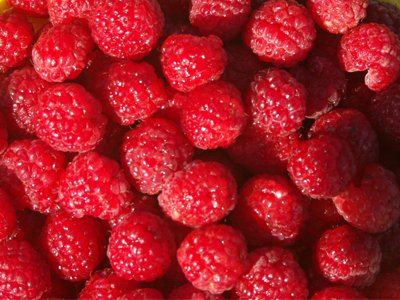
This past Thursday I was at home in West Valley dog sitting a new puppy my family recently acquired. It's a wonderfully behaved puppy but don't let that fool you, he'll still poop on the floor if you don't keep an eye on him. Anyway, I let the dogs out in the backyard so they could take care of business and get some of their energy out. The weather was gorgeous and I noticed there were plenty of raspberries ready to be picked, so I grabbed a bowl and set to the task of filling it to the brim with raspberries as an excuse to enjoy the nice weather.
While I was picking raspberries I came to two conclusions: First, life would be simply beautiful if it required only gardening and reading books. And second, picking raspberries is a lot like studying the scriptures.
Let me explain the second. My younger brothers had breezed over the raspberry bushes a couple days previous and had obviously gone straight to the prominent and easily accessible raspberries. They filled up a bowl, but left plenty of huge ripe raspberries untouched. While I was picking raspberries I realized that I could stand in one spot for quite some time and pick a lot of raspberries. Then I would move down a couple of feet and pick more. When I looked back at the section of bush I thought I had picked clean, I was surprised to see many ripe raspberries still there. From my previous vantage point I had missed some clusters that had been hidden under leaves. All it took was lifting up a branch or getting a little lower to see if there were more berries before I moved on to the next section.
As we approach the scriptures we can quickly read through them and pick out the obvious insights and teachings. There are beautiful doctrines that are there near the surface so even children can understand them.
We can find even more in each passage of scripture as we spend more time and attention focusing on the passage before moving on. (After all, the goal isn't to race from one end of the raspberry bush to the other, it is to fill your bowl with raspberries) Spend time in the scriptures.
There is always more to find in the scriptures especially as life alters the perspective we approach the scriptures with. New insights come as we look for specific answers to questions as they relate to us in our own unique situation. Also, often as we spend time in the scriptures we just need to dig a little deeper. Lift up a branch, look under some leaves. This may require time to ponder and meditate. In fact, not all the berries are ripe at the same time. Some treasures in the scriptures are found after a lot of time has been spent searching, when we are ripe and ready.
Halfway through my quest to fill my bowl with berries I realized that to really get in there and get some of those raspberries I was going to have to get dirty. By the time I was done my hands were stained red and I had some red spots on my T-shirt. Scripture study becomes the most meaningful when we get out there and apply what we've learned. Don't be afraid to get dirty through work and service.
Keep your hands clean by getting them dirty through service.

Monday, April 27, 2009

Parable of the Film Emulsion


I'd like to share a gospel insight that I discovered as a result of photography a little over a year ago.

…have ye spiritually been born of God? Have ye received his image in your countenances? Have ye experienced this mighty change in your hearts? …can you look up, having the image of God engraven upon your countenances? (Alma 5:14,19)

How is it that we can have the image of God engraved upon our countenances?” Perhaps the parable of the film emulsion can help explain it.

Film emulsion is made of millions of light sensitive salts and crystals that react and change to light, and make photography possible. When the light sensitive emulsion of film is exposed to light coming through the camera lens, past the shutter, the image of whatever the camera was “looking at” is “engraved” on the film. The emulsion is extremely sensitive so the camera settings must be very precise to take a clean picture. So it is with us, if we look to Christ his light will shine through and engrave itself on our countenance. We have to be careful not to take our eyes off of Christ and the light of the gospel and “expose ourselves” to harmful influences. When we are looking for solutions to the stresses of life, where do we look? If we want Christ’s image in our countenance it’s not simply enough to look in his general direction. The lens must be adjusted and the focus set. It is easy to miss the mark and lose focus if we don’t give careful attention to our priorities. Even within the frame of the gospel, is Christ the center of our attention, focus, worship, and service? In a world of so much filth hopefully we are especially careful about the images and messages that appear in front of our lens. If we want to keep ourselves spiritually sensitive, we can’t afford to overexpose ourselves to worldly influences or underexpose ourselves to light of the gospel.

Thursday, February 26, 2009

Message of the Restoration


Take a look at this YouTube Channel MormonMessages and share it with your friends.

Tuesday, December 23, 2008

Consecration

Except from a general conference talk by Elder Neal A. Maxwell:

In striving for ultimate submission, our wills constitute all we really have to give God anyway. The usual gifts and their derivatives we give to Him could be stamped justifiably “Return to Sender,” with a capital S. Even when God receives this one gift in return, the fully faithful will receive “all that [He] hath.” What an exchange rate!

Meanwhile, certain realities remain: God has given us our lives, our agency, our talents, and our opportunities; He has given us our possessions; He has given us our appointed mortal spans complete with the needed breaths. Guided by such perspective, we will avoid serious errors of proportion. Some of these are far less amusing than would be hearing a double quartet and mistaking it for the Tabernacle Choir!

No wonder President [Gordon B.] Hinckley … stressed our being a covenant people, emphasizing the covenants of the sacrament, tithing, and the temple, citing sacrifice as the “very essence of the Atonement.”

In pondering and pursuing consecration, understandably we tremble inwardly at what may be required. Yet the Lord has said consolingly, “My grace is sufficient for you.” Do we really believe Him? He has also promised to make weak things strong. Are we really willing to submit to that process? Yet if we desire fulness, we cannot hold back part!

read the whole thing